

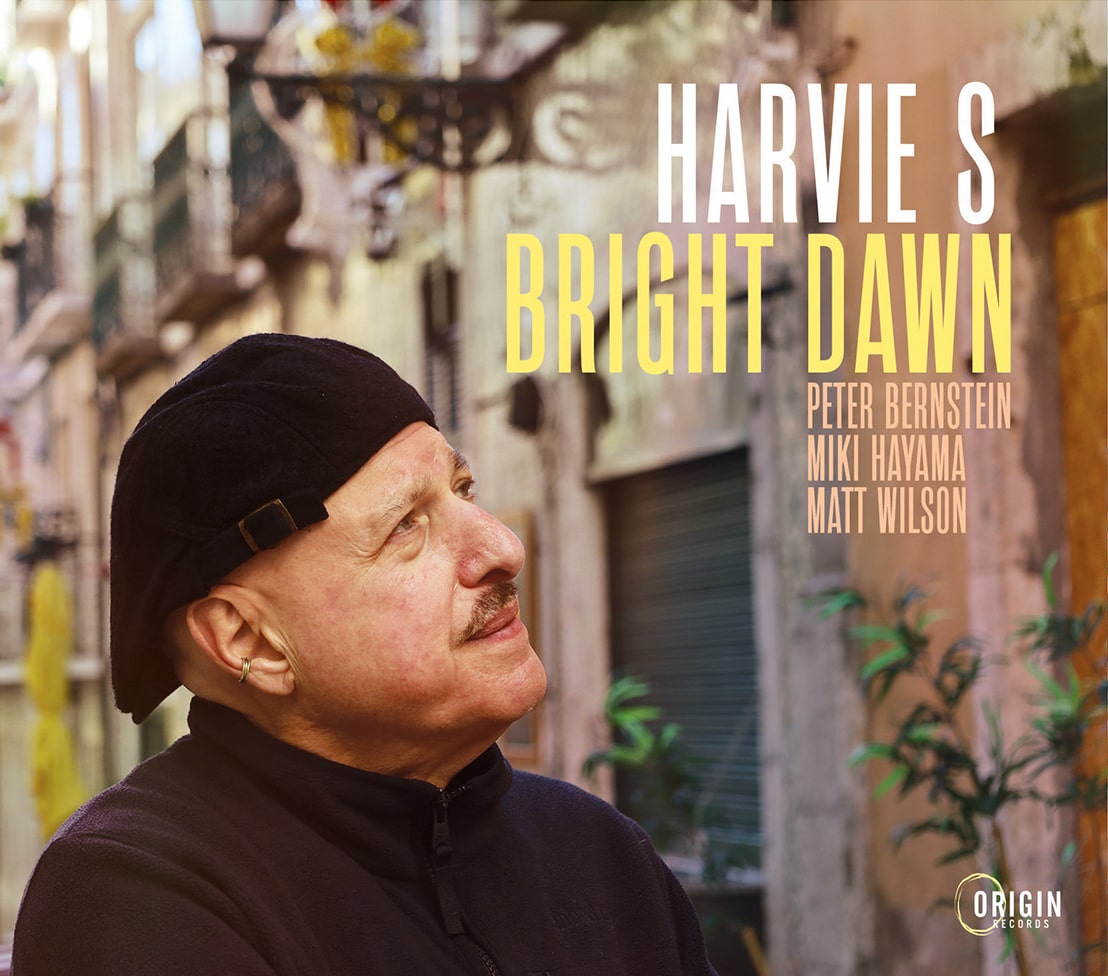
Harvie S Band with Matt Wilson Miki Hayama and Rale Micic
Few bassists in contemporary jazz combine diplomatic stature, compositional ambition and melodic authority as convincingly as Harvie S. A former Jazz Ambassador for the United States, a touring artist across Europe and Southeast Asia, and co-leader of the influential Double Image, which recorded for ECM Records and Enja Records, Harvie S brings decades of global experience to Bright Dawn. But this album is not a retrospective statement. It is a forward-facing work, a meditation on narrative, texture and the evolving role of the double bass in modern jazz.
From its opening moments, the record establishes a language that is both contemporary and grounded in tradition. The melodic lines are expansive but never indulgent; rhythmic structures shift subtly, sometimes stretching across bar lines, sometimes tightening into sharply defined pulses. What distinguishes the writing is not complexity for its own sake, but architectural control. Themes unfold patiently, then fracture into improvisational dialogue before reassembling with quiet inevitability.
The ensemble, carefully chosen, highly responsive, approaches the material without hesitation. There is no sense of musicians navigating difficulty; instead, there is collective fluency. Harmonic colors are explored rather than merely stated. Dynamics swell and recede organically. The interplay suggests years of listening, not just to each other, but to the broader history of the music.
Harvie S has often been associated with the spacious aesthetic of ECM, yet here he moves beyond atmosphere into something more structurally assertive. This is not ambient lyricism. It is acoustic fusion in its most thoughtful form, a synthesis of jazz lineage, chamber-like intimacy and rhythmic elasticity. Written passages dissolve into improvisation so seamlessly that the boundaries blur. The album rewards, and demands, repeated listening.
A reinterpretation of Chick Corea’s “Humpty Dumpty” offers a revealing case study. Rather than treating the piece as repertoire, Harvie S reframes it. The familiar contours remain, but tempo inflections and subtle reharmonizations shift the emotional center. The bass does not simply anchor; it converses, redirects, occasionally destabilizes before restoring equilibrium. It is interpretation as authorship.
The solo bass passages throughout the album are among its most arresting moments. In these spaces, Harvie S demonstrates a rare ability to balance technical command with narrative clarity. Pizzicato lines speak with muscular directness; arco passages bloom with almost orchestral resonance. He moves from grounded resonance to suspended harmonics with deliberate pacing, allowing silence to function as structural punctuation. The double bass becomes not accompaniment, but protagonist.
That narrative impulse reaches its emotional apex when he takes up the bow on “Navalny.” The performance carries a cinematic weight, unfolding less like a jazz solo than like a monologue. Long, sustained tones create tension against restrained harmonic movement beneath them. There is restraint, but also quiet urgency. The piece suggests contemplation, of loss, of resilience, of elemental forces, without resorting to sentimentality. Wind, water, light: the music feels attentive to the natural world without imitating it.
What ultimately defines Bright Dawn is clarity of intent. Every motif feels considered. Every rhythmic displacement serves a purpose. Yet the album never sounds academic. Listeners can follow the melodic lines at face value and find immediate pleasure. Those who lean in more closely will discover deeper structural conversations, counterlines emerging beneath themes, rhythmic tensions resolving across extended arcs.
Harvie S does not overwhelm the listener; he trusts them. That trust may be the album’s most radical gesture. In an era of maximalism and speed, Bright Dawn insists on patience. It insists on attention. It insists that the double bass, often relegated to foundation, can instead articulate the conscience of the ensemble.
This is not merely a display of mastery. It is a reminder that jazz, at its most vital, is both story and structure ,emotion shaped by design. And here, Harvie S shapes both with unflinching precision and quiet authority.
Thierry De Clemensat
Member at Jazz Journalists Association